


Information as of October 2026.
New here? Please read Start Here first. It explains who I am, and what the colored boxes and speech bubbles in this guide mean.
Have you ever prayed at a Japanese shrine?
How much do you put in the offering box? Do you clap? And what do you do with your omikuji (fortune slip) after you draw it?
Shrines have lots of small manners, and even Japanese people get fuzzy about some of them. I’ve lived in Japan for over 40 years and have been to shrines more times than I can count. But when I looked things up properly, I found I didn’t really know half of it.
So this guide walks you through a shrine visit, from the torii gate to the moment you leave, plus omikuji, goshuin stamps, and what to do with old charms.
If you’re not sure whether you’re at a shrine or a temple, read Shrine or Temple? How to Tell Them Apart first.
- How to enter a shrine: the torii gate and the path
- How to do temizu: washing your hands and mouth
- How to make an offering and ring the bell
- How to pray at a shrine: bow twice, clap twice, bow once
- What to do with your omikuji: tie it or take it home?
- How to get a goshuin
- How to return old ofuda and omamori
- Quick summary: how to visit a shrine
- When things go wrong
- Cheat sheets you can use right away
- FAQ
- Read next
How to enter a shrine: the torii gate and the path
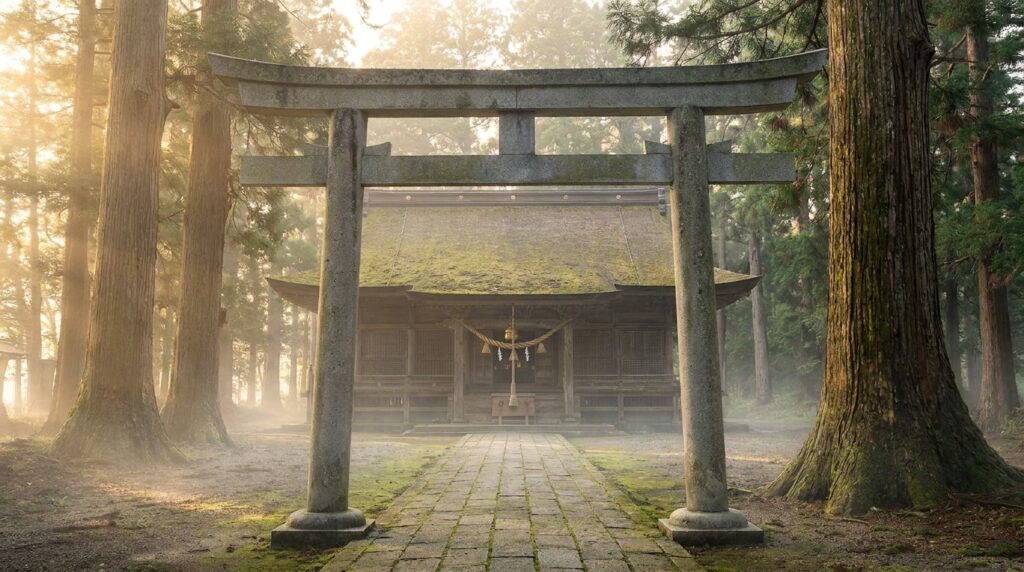
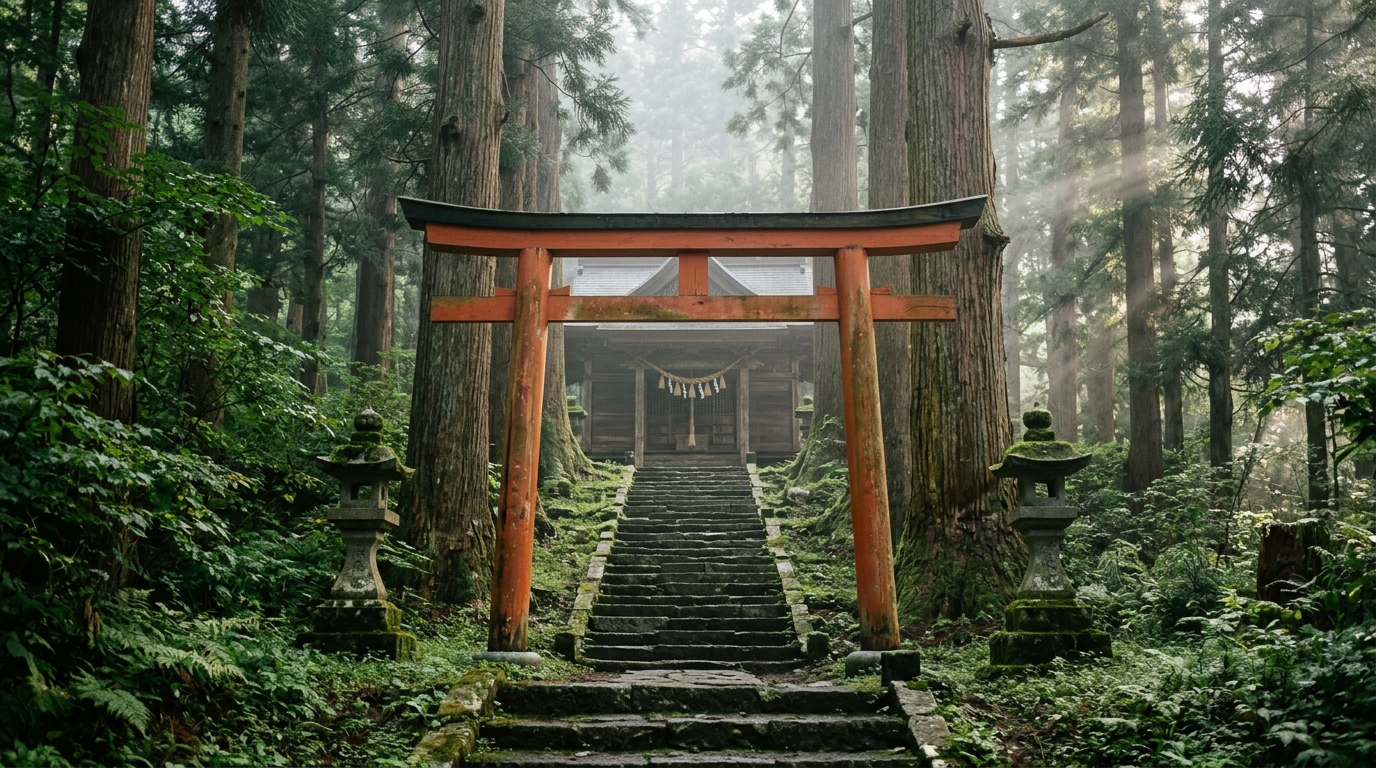
At the entrance of a shrine stands a torii, a gate that marks the shrine grounds.
Think of what’s beyond the torii as the home of the kami, the Shinto gods.
When you visit someone’s home in Japan, you say “ojama shimasu” (“sorry for intruding”) at the door. When you leave, you say “ojama shimashita.” Bowing at the torii is the same kind of greeting. Bow lightly before you walk through, and when you leave, turn around after passing the torii and bow once more.
Bow lightly toward the shrine when you walk through the torii, and again when you leave.
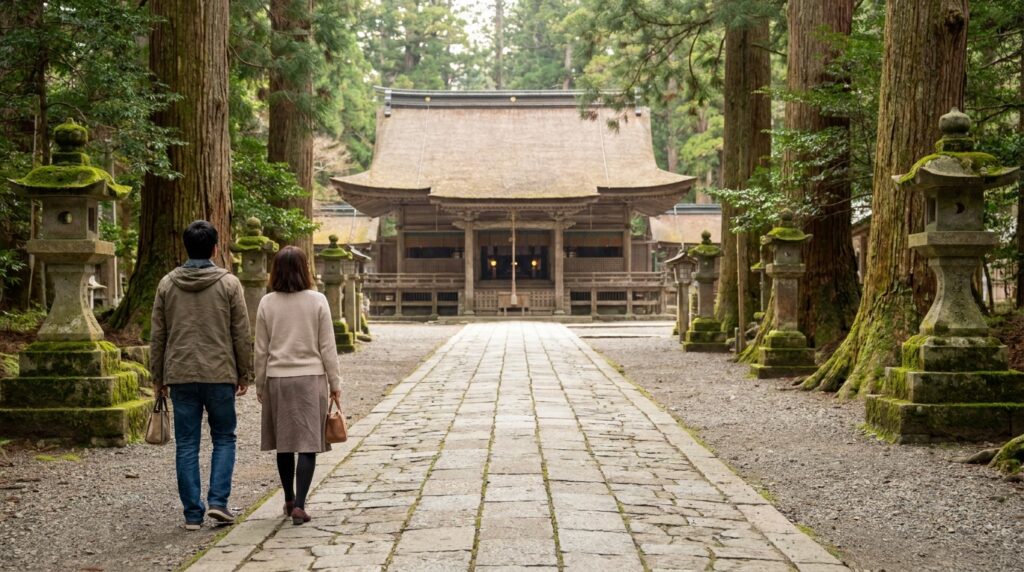
The path from the torii to the hall of worship is called the sando. The middle of the sando is said to be the path of the kami, so people walk a little to the side.
Walk a little to the side of the path, not in the middle.

I really love this manner. You can’t see the kami, but they’re there. So you leave the path open for them. I think it comes from a very Japanese way of feeling.
How to do temizu: washing your hands and mouth
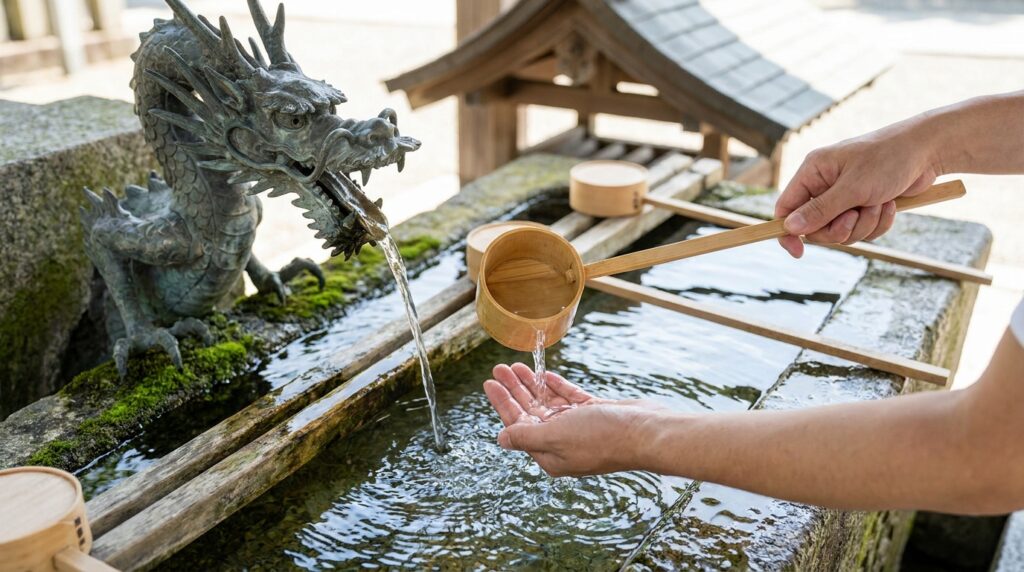
Along the path, you’ll find a small roofed water basin. This is the chozuya. Here you use a hishaku (a ladle with a long handle) to purify your hands and mouth before you pray. This is called temizu.
It’s just washing your hands, but there’s a set order. I’d heard it explained a few times, but I was never quite sure. So for this guide, I looked it up properly.
Do temizu in this order: left hand, right hand, mouth, left hand again, then stand the ladle up and put it back.
- Hold the ladle in your right hand, scoop some water, and pour it over your left hand.
- Switch the ladle to your left hand and pour water over your right hand.
- Switch back to your right hand. Pour a little water into your cupped left hand, and rinse your mouth with it.
- Spit the water out quietly onto the ground by the drain, not back into the basin.
- Pour water over your left hand once more.
- Hold the ladle upright so the remaining water runs down the handle and cleans it for the next person. Put it back.
Never put your mouth directly on the ladle.
Written out, it’s a lot of steps. No wonder people get confused.
Some chozuya these days have no ladles, just water flowing from a bamboo pipe. In that case, wash in the same order using the running water.
How to make an offering and ring the bell
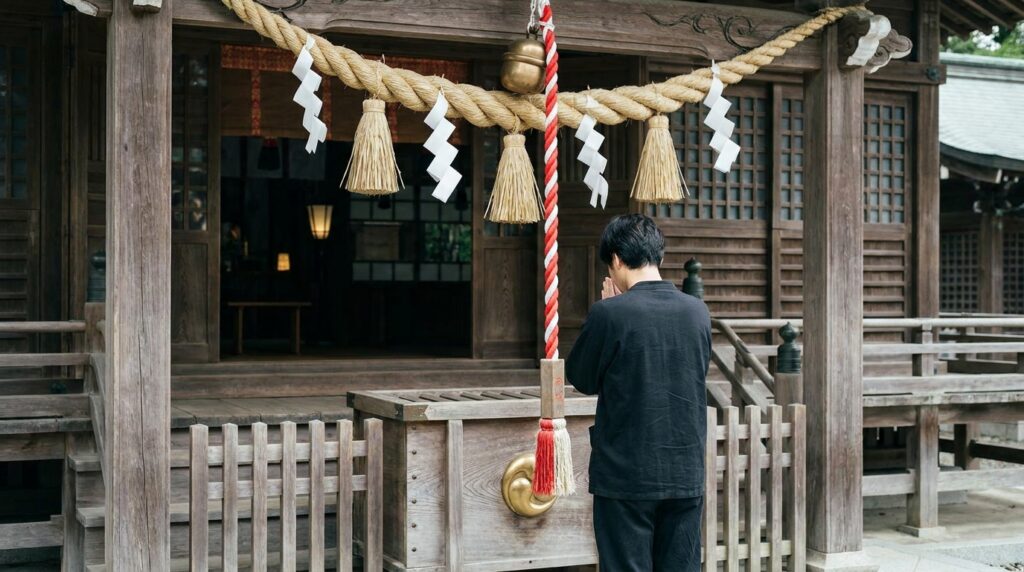
After temizu, walk to the haiden, the hall where you pray. In front of it, you’ll find an offering box for saisen (money offerings), and often a large bell.
Offering first, or bell first? Some shrines say either order is fine. The bell is said to purify you and let the kami know you’ve come. Many shrines don’t have one.
How much money to offer
The amount you’ll hear most often is 5 yen. In Japanese, 5 yen is “go-en,” which sounds like goen, a word for a good connection or fate with people and things.
I always used to put in 5 yen without really thinking about it. When I looked into it, I found 5 yen wasn’t the only “lucky” amount.
Japanese has a lot of goroawase, wordplay where numbers sound like other words. Offering amounts have meanings too.
Amounts said to be lucky
- 5 yen (go-en = goen): for good connections
- 15 yen (jugo-en = “plenty of goen”): for lots of good connections
- 25 yen (nijugo-en = “double goen”): for connections that build on each other
- 45 yen (shijugo-en = “goen from start to end”): for connections that last
- 50 yen: worth ten 5-yen coins. Like the 5-yen coin, it has a hole, which some say means “a clear view ahead”
Amounts some people avoid
- 10 yen (to-en, which sounds like “distant connection”)
- 500 yen: there’s no bigger coin, so some read it as “no further connection”
But the most important point is this: there is no set amount. The wordplay is just something to go by if you can’t decide. An offering is a way of saying thank you to the kami. Any amount is fine.
Don’t throw your coins from a distance. Step up to the box and put them in quietly.
How to ring the bell
Hold the thick rope hanging from the bell, called the suzu-o, and gently swing it. There’s no set number of times. Don’t swing it wildly or yank it hard.
At some shrines, the bell takes a bit of a knack to ring. If it doesn’t ring clearly, don’t worry about it.
Once you’ve made your offering and rung the bell, it’s time for the clapping I wrote about in Shrine or Temple?
How to pray at a shrine: bow twice, clap twice, bow once
Pray with “nirei nihakushu ichirei”: bow twice, clap twice, bow once. If the shrine posts its own way, follow it.
At a shrine, you pray with nirei nihakushu ichirei: two deep bows, two claps, then one more deep bow.
When I put my hands together, I say a short prayer in my head:
“Harae tamae, kiyome tamae.”
It asks the kami to “clear away what is impure, and make me clean.” The full version is a short prayer called ryakuhaishi:
“Harae tamae, kiyome tamae, kamunagara mamori tamae, sakiwae tamae.”
- Harae tamae: please clear away impurity and bad things
- Kiyome tamae: please make my heart and body clean
- Kamunagara mamori tamae: please protect me, as the kami will it
- Sakiwae tamae: please give me happiness
I learned it somewhere along the way and have said it ever since. But it raises a question: when do I make my own wish?
I say the ryakuhaishi, then my wish… it gets a bit long. When there are people waiting behind me, I end up saying it all really fast in my head.
The good news: you don’t have to say the ryakuhaishi at all. Some people say it, some don’t. If it feels too long, some say just the first part, “harae tamae, kiyome tamae,” is enough.
Make your wish silently after the two claps, with your hands still together, before the final bow.
Before your wish, first say thank you in your heart, something like “thank you, as always.” Then make your wish. Some people also tell the kami their name and address in their head.
Here’s how I usually do it:
Bow twice → clap twice → hands together, “harae tamae, kiyome tamae” → my name and address → my wish → bow once
It’s best to keep your wish short, just one thing. That’s kinder to the people waiting behind you. (And I imagine the kami would find a long list a bit tiring, too.)
What to do with your omikuji: tie it or take it home?
After praying, many people draw an omikuji, a paper slip that tells your fortune.
I tie every omikuji I draw at the shrine before I go home. Even daikichi (great luck). Even kyo (bad luck). I still do.
You can tie your omikuji at the shrine or take it home. If you tie it, use the omikuji rack, not a tree branch.
By the way, you can take it home. One way of thinking is that an omikuji is meant to be carried around and reread as a guide for the coming days. Whether to tie it or take it home depends on the shrine. There’s no nationwide rule. If you tie it, use the omikuji musubisho, the rack or rope set up for it. Don’t tie it to a tree branch on your own.
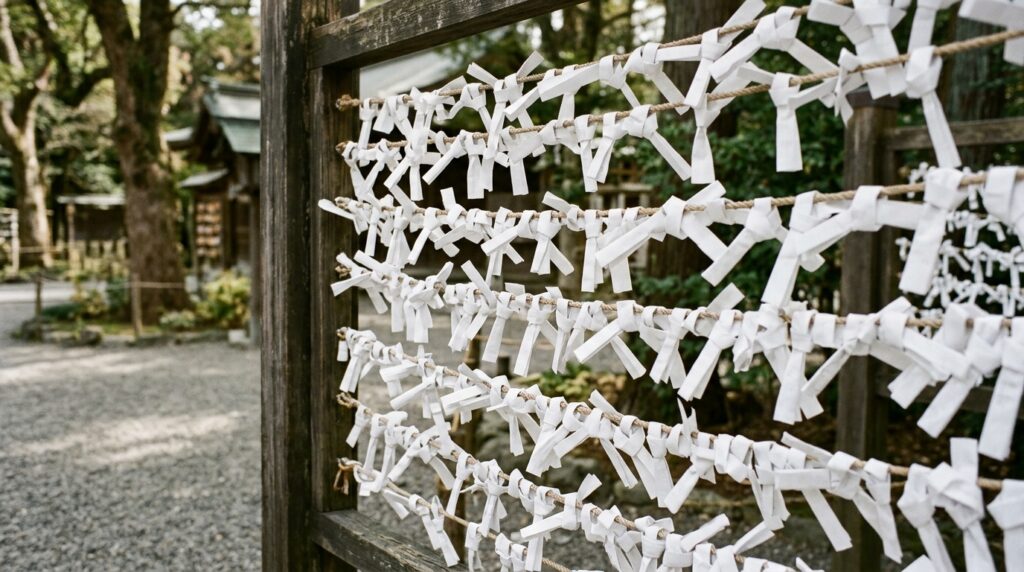
Once I drew daikichi and was so happy that I took it home. I kept it in my wallet for a while. Then I got stuck.
How long am I supposed to keep this? Can I just throw it away?
Here’s what I found:
- If you drew it at New Year, the usual timing is to return it at the start of the next year. Some people return it when their wish comes true, as a “thank-you visit.”
- Return it to the shrine’s kosatsu osamesho, a box or counter for old charms and paper amulets. Other shrines may also accept it, not just the one where you drew it. Pray there first, then return it.
- Try not to throw it away with regular trash. If you really have to, one way is to sprinkle it with a little salt and put it out separately from other trash.
If you take an omikuji home, return it to a shrine after about a year.
If you’re traveling, you may not be back at a shrine next year, so it might be easier to tie it before you leave.
How to get a goshuin
These days, lots of people collect goshuin, the handwritten ink and red stamps you can get at shrines and temples.
I don’t collect them myself. But when I found out a friend did, I thought: “If I get a goshuin at a shrine on my trip, would that make a nice souvenir?”
When I looked into it, it turned out that’s better not done.
Don’t get a goshuin for someone else, or as a souvenir.
A goshuin is seen as proof that you yourself came and prayed. So getting one for someone who didn’t visit is something to avoid. Some popular shrines and temples even post signs saying they don’t write goshuin on someone else’s behalf.
Pray first, then get your goshuin.
Also, the basic idea is to get your goshuin after you pray. Getting only the stamp without praying is considered bad manners.
If you want a souvenir, a blank goshuincho (a special book for goshuin) or an omamori charm is a good choice. A blank book might make your friend even happier, because then they can go and collect their own.
How to return old ofuda and omamori
Last, how to return old ofuda (paper amulets from a shrine) and omamori (small charms).
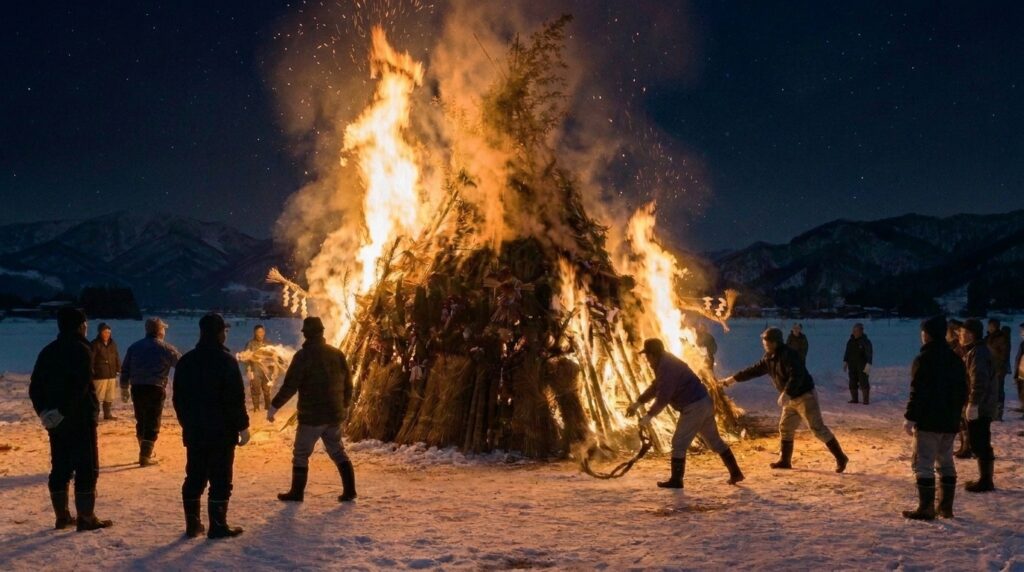
In my small town in rural Tohoku, after New Year there’s an event called sai no kami. Around Japan it has many names depending on the area, like dondo yaki or sagicho.
People bring the ofuda and engimono (lucky charms and decorations) they kept for the year, and burn them in a big fire. My family brings ofuda and okiagari koboshi, little dolls that stand back up when you knock them over.
After the fire burns down, we used to grill squid over it and eat it. Around Japan, it’s more common to grill mochi or dango, which is said to keep you healthy for the year.
These events only happen in some areas, though. The usual way is to return old ofuda and omamori to a shrine.
Return old ofuda and omamori to a shrine after about a year.
About one year is the usual guide. Return shrine items to a shrine, and temple items to a temple. Many shrines accept them at their kosatsu osamesho all year round. Even if you miss dondo yaki, just ask at a nearby shrine.
Quick summary: how to visit a shrine
- STEP 1Bow at the torii.
Bow lightly before you walk through.
- STEP 2Walk to the side of the path.
The middle is for the kami.
- STEP 3Do temizu.
Left hand → right hand → mouth → left hand → stand the ladle up and put it back. Never put your mouth on the ladle.
- STEP 4Make your offering and ring the bell.
Put the coins in quietly. Ring the bell if there is one.
- STEP 5Bow twice, clap twice, bow once.
Two bows, two claps, make your wish silently with your hands together, then one deep bow.
- STEP 6Bow again when you leave.
Turn around after the torii and bow once.
Omikuji, goshuin, and omamori come after you’ve prayed.
When things go wrong
Just watch the people around you and copy them. Many shrines have a sign at the chozuya showing the steps. If you remember only one thing, make it this: don’t put your mouth on the ladle.
There’s no set amount. A 10-yen or 100-yen coin is fine. Some people care about the wordplay, but your feelings matter more. To avoid a last-minute scramble, get your coins ready while you’re waiting in line.
Keep your wish short, just one thing, and make room for the people behind you. Don’t throw your coins from the back. Move closer before you put them in. (On busy days, I end up saying my prayer really fast in my head, too. One short wish is plenty.)
Many people tie it at the omikuji rack before they leave. You can also take it home and reread it as a reminder of what to watch out for.
Return it to a shrine’s kosatsu osamesho whenever you notice. Pray at that shrine first, then return it.
Cheat sheets you can use right away
1. Shrine visit checklist
- Bow at the torii
- Walk to the side of the path
- Temizu: left → right → mouth → left → stand the ladle up
- Put your coins in quietly
- Bow 2 → clap 2 → wish → bow 1
- Bow again at the torii on your way out
2. When you’re not sure at temizu or omikuji
How do I use the water basin?
手水は、どうやって使いますか?
Chōzu wa, dō yatte tsukaimasu ka?
Where should I tie my omikuji?
おみくじは、どこに結べばいいですか?
Omikuji wa, doko ni musubeba ii desu ka?
3. When you want to return an old omamori or omikuji
Where can I return my old omamori?
古いお守りは、どこに納めればいいですか?
Furui omamori wa, doko ni osamereba ii desu ka?
I got this at another shrine. Can I return it here?
ほかの神社でいただいたものですが、ここに納めてもいいですか?
Hoka no jinja de itadaita mono desu ga, koko ni osamete mo ii desu ka?
FAQ
- QCan I pray at a shrine if I’m not Shinto?
- A
Yes. Meiji Jingu in Tokyo, for example, says on its English Q&A page that people who don’t follow Shinto can pray there. Follow the manners of the place and pray from the heart.
- QCan I use a handkerchief after temizu?
- A
Yes. It’s fine to dry your hands with a handkerchief. It’s handy to bring one.
- QHow much should I offer?
- A
There’s no set amount. Many people offer 5 yen (“goen,” good connections), but your thanks matter more than the amount.
- QDo I have to say “harae tamae, kiyome tamae”?
- A
No. Some people say it, some don’t. Bowing twice, clapping twice, and bowing once is enough.
- QShould I tie my omikuji or take it home?
- A
Either is fine. It depends on the shrine. If you take it home, return it to a shrine after about a year.
- QCan I get a goshuin for a friend?
- A
A goshuin is proof that you yourself came and prayed, so getting one for someone else is best avoided. For a souvenir, a blank goshuincho or an omamori is a better choice.
- QI missed dondo yaki. What do I do with my old ofuda?
- A
If another shrine holds dondo yaki on a different day, you can take it there. Many shrines also accept old ofuda at their kosatsu osamesho.
Read next
- Not sure if it’s a shrine or a temple? Read Shrine or Temple? How to Tell Them Apart in Japan.
- Guides on how to pray at a temple and at an Inari shrine are coming next.
I’m Japanese, and I write my drafts in Japanese with help from AI to turn them into natural English. The experiences here are my own. Some photos are AI-generated. If something is unclear, or things are different where you live, please leave a comment below. I’ll reply there, so the next reader can find the answer too.
I also write about Japanese manners in Japanese on note: note.com/enjoyjapan
Sources
- Japan Tourism Agency, multilingual explanation database, “Chozuya (how to do temizu)” (Japanese) https://www.mlit.go.jp/tagengo-db/H30-00524.html
- Yamanashi Tourism Organization, “How to pray” (order of offering and bell, meaning of the bell, Japanese) https://www.yamanashi-kankou.jp/rekitabi/chishiki/sanpai.html
- Rurubu & more (torii, sando, when to make your wish, Japanese) https://rurubu.jp/andmore/article/24005
- All About, “How much to offer” (no set amount, wordplay, Japanese) https://allabout.co.jp/gm/gc/491769/
- Rekishi no Eki, “Harae tamae, kiyome tamae” (meaning of the ryakuhaishi, Japanese) https://rekishinoeki.org/haraetamai-kiyometamae/
- Oggi.jp (what to do with an omikuji you took home, Japanese) https://oggi.jp/6384416
- All About (returning old omamori, ofuda, and omikuji, Japanese) https://allabout.co.jp/gm/gc/507877
- Meiji Jingu, “Q&A” (can non-Shinto visitors pray) https://meijijingu.or.jp/en/qa
- Goshuin Guide (getting goshuin for others or as souvenirs, Japanese) https://gosyuin-guide.com/gosyuin-dairi/
- More Than Tokyo (dondo yaki) https://www.morethantokyo.com/?p=6691
Comments