

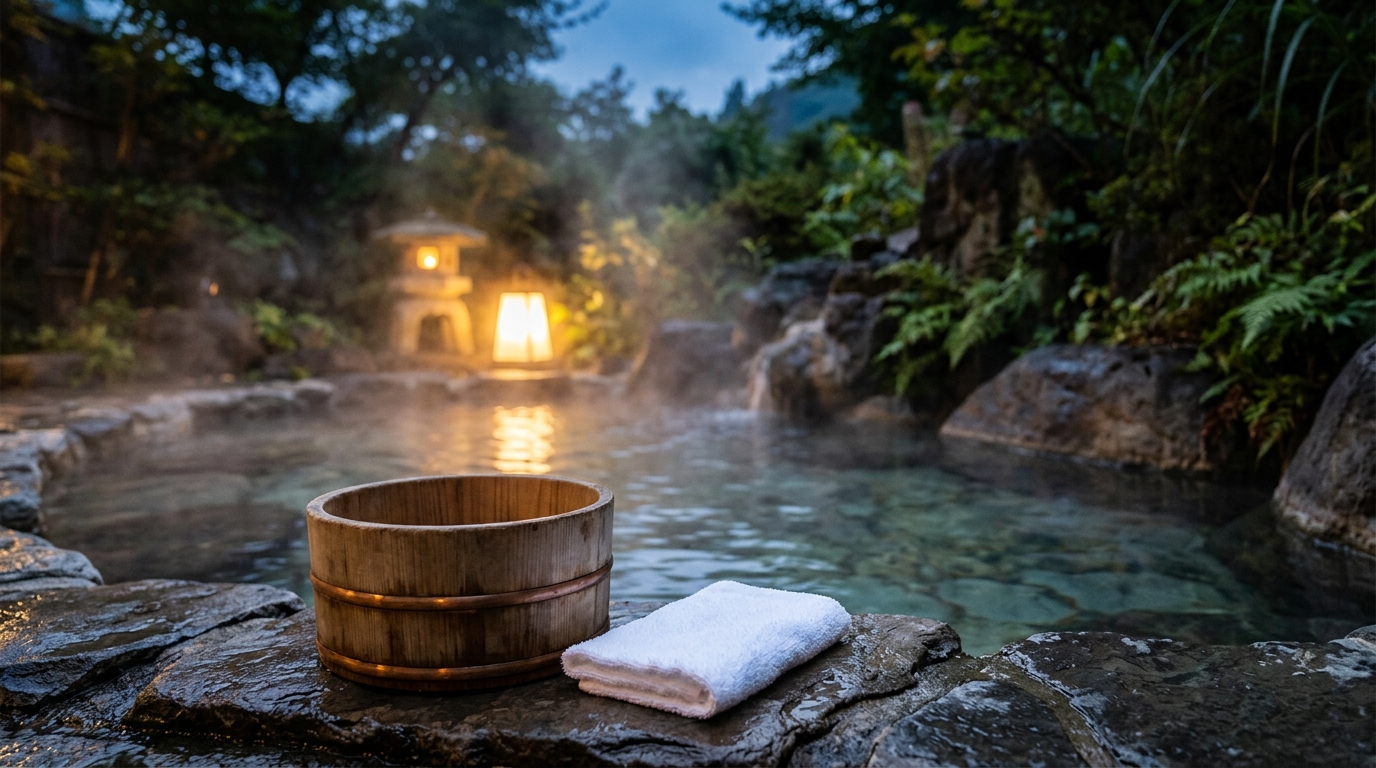
Information as of October 2026.
New here? Please read Start Here first. It explains who I am, and what the colored boxes and speech bubbles in this guide mean.
While I was writing my guide to the sento, one thought kept coming back:
Japan has way too many kinds of public baths.
Sento, super sento, kenko land, onsen, sauna. We Japanese switch between them without thinking. But if you just arrived in Japan, they probably all look like the same thing: “a big bath.”
And they’re not the same. How you pay, what you bring, and how long you stay are all different. Walk into a super sento expecting a sento and you’ll go “wait, what?” And the other way around, too.
So this guide explains the difference between each type of bath. At the end, I’ll also tell you which one to choose for what you want to do.
- I went to a kenko land before I ever went to a sento
- What is a sento?
- What is a super sento?
- What is a kenko land?
- What counts as an onsen?
- What is a sauna facility?
- Which Japanese bath should you choose?
- Quick summary: how to use a super sento or kenko land
- When things go wrong
- Cheat sheets you can use right away
- FAQ
I went to a kenko land before I ever went to a sento
The first “big bath” I knew wasn’t a sento. It was a kenko land (a big bath and leisure complex).

When I was a kid, my family went to kenko land all the time. Take a bath, eat, lie around in the lounge, take another bath. For a kid, it was basically an amusement park.
As an adult, I even stayed the night once in a zakone-beya, a big room where lots of people sleep side by side on mats. Sleeping under a blanket in the same room as a bunch of strangers felt like a school trip. Honestly, it was a lot of fun.
So when I went to a sento for the first time as an adult, I was surprised by the price. A real, big bath for so much less than a kenko land!
But after going a few times, I got it. A sento and a kenko land or super sento are places with different purposes. A sento is a bath for everyday life. A super sento or kenko land is a bath for spending your day off doing nothing.
It’s not that one is better. Both are important places to me.
What is a sento?
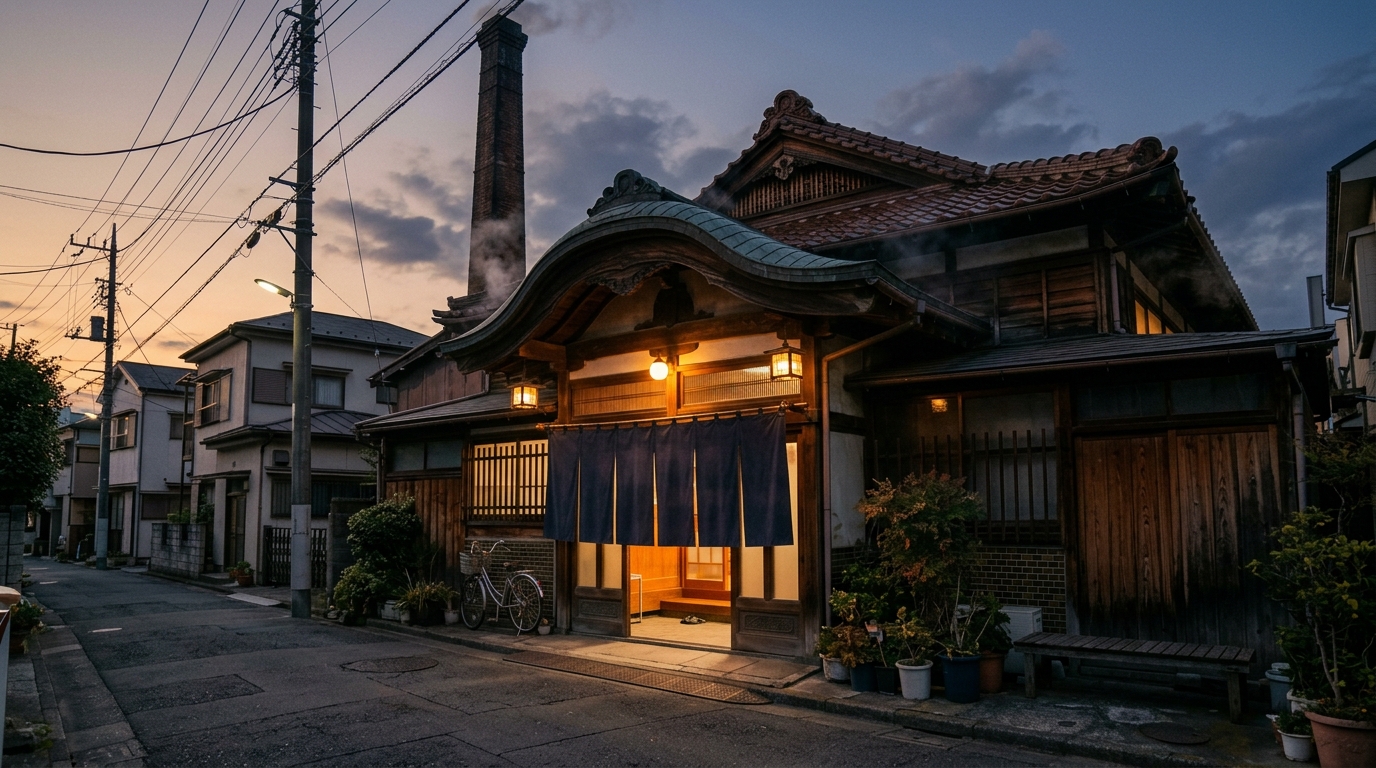
A sento is a neighborhood bathhouse where locals come to take their daily bath. I wrote a full step-by-step sento guide, so here I’ll only cover how it’s different from the others.
The price is capped by law
Sento are treated as “general public baths” under Japanese law. Because they’re seen as something people need for daily life, each prefecture sets a maximum price. In Tokyo, an adult pays 600 yen (since August 2026). Almost every sento in the same area costs about the same.
In exchange, a sento is basically “a place to take a bath and go home.” Most have no lounge wear and no restaurant. Most locals stay 30 minutes to an hour.
The “family feel” of the regulars
Many sento customers are local regulars, and maybe that’s why a sento has a kind of “family feel” with the other customers. A chat might start with the person next to you in the bath. The person at the front remembers the regulars’ faces.
It’s not just the hot water. This warmth of the heart is part of what I love about sento.
Go to a sento first
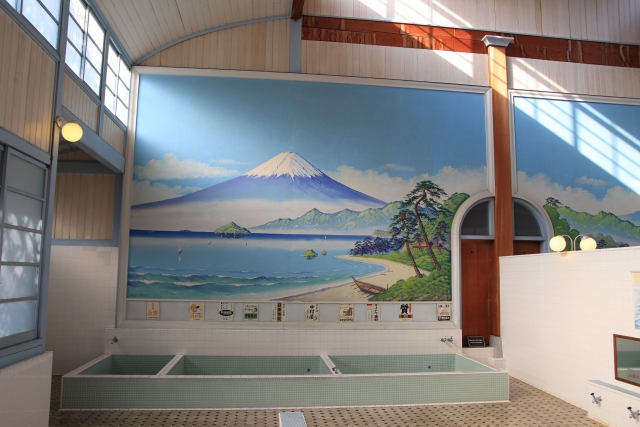
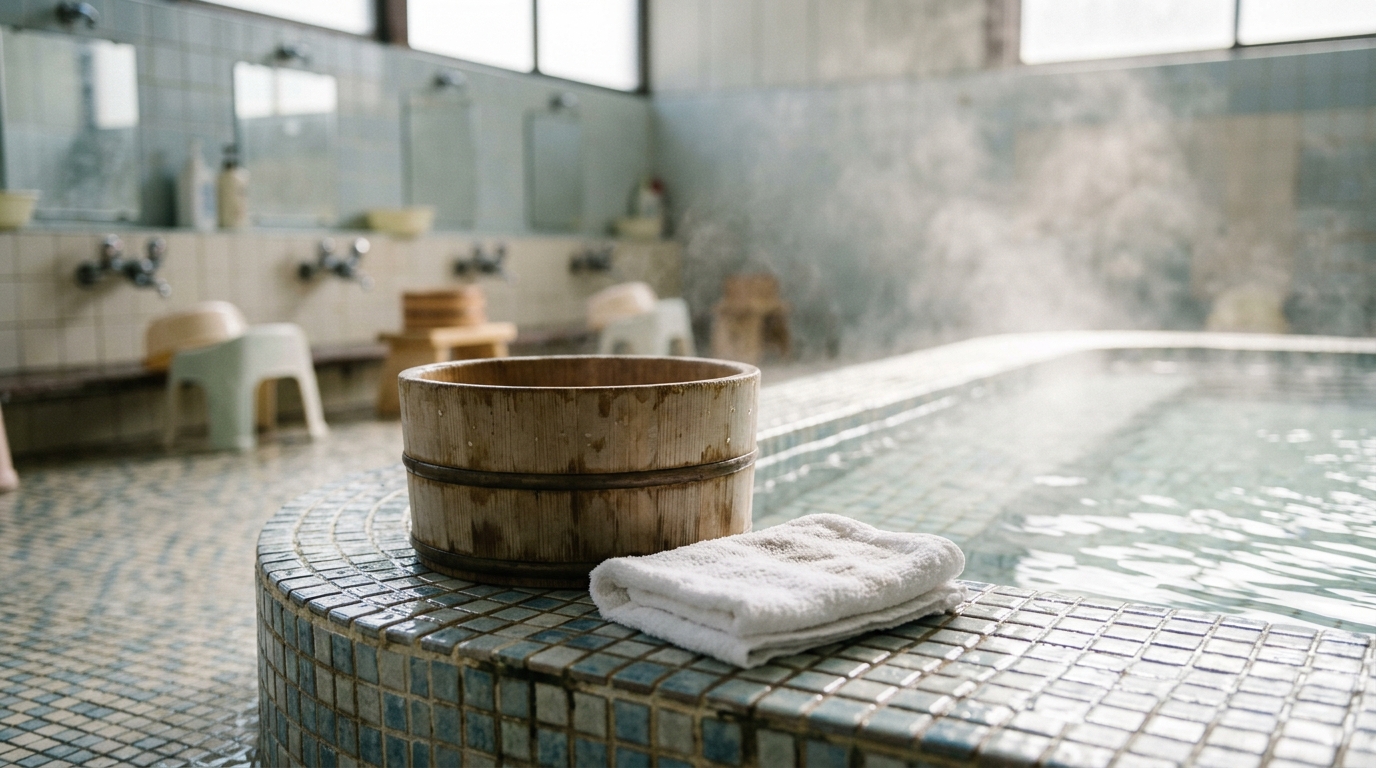
I’d love for anyone visiting Japan to go to a sento first. The Mount Fuji painting, the bandai seat, the wooden shoe-locker keys, coffee milk after the bath. That “this is Japan” feeling is hard to find anywhere else.
What is a super sento?
In short, a super sento is “a big sento with lots of different baths.”
Many baths, and the price
Outdoor baths (rotenburo), carbonated baths, jet baths, baths you lie down in, saunas. There are so many baths that just trying each one eats up the time.
It has “sento” in the name, but legally it’s a different type of public bath. So each place sets its own price, usually around 1,000 yen. Weekends often cost a little more. For example, Gokurakuyu Meike in Niigata was 850 yen on weekdays, and Super Sento Yudokoro Kasai in Tokyo was 1,000 yen on weekdays and 1,300 yen on weekends and holidays (prices when I checked).
Spending the whole day in lounge wear
What I love most about super sento is the kannai-gi, the pajama-like lounge wear you wear inside. After the bath, I change into it and lie around in the lounge. When I’m hungry, I eat at the restaurant inside. When I’m sleepy, I nap in a reclining chair. When I wake up, back to the bath. This “I could stay here all day” feeling is the best.
If a sento is “a place you go to take a bath,” a super sento is “a place you go to spend the day.”
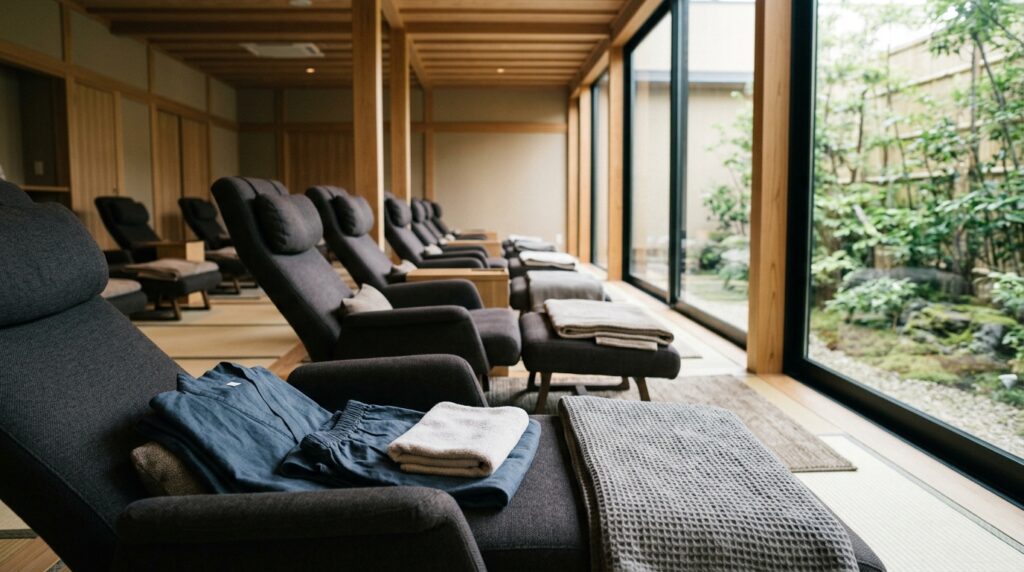
Lounge wear is for inside the building only.
You can wear it in the lounge, the restaurant, and almost anywhere inside. Just don’t walk out to the parking lot or a shop outside in it.
How to pay with a wristband
The rules are different from a sento, too.
One big difference is how you pay. At many super sento, you get a wristband with your locker key at the entrance. When you eat or buy drinks inside, you don’t pay on the spot. The wristband’s barcode or number keeps a record, and you pay for everything at once when you leave.
Keep your wristband on. You’ll use it to pay when you leave.
(It’s easy to eat a bit too much and then go “huh?!” at the register on the way out. That’s a classic super sento moment.)
Some things, like the ganbanyoku (a “stone bath” where you lie on warm stones and sweat), massages, and towels, cost extra on top of the entry fee.
When the sauna costs extra
Recently, the place I often go to started charging extra for the sauna. The sauna is right there in the bathing area, so it looks like anyone can use it. But people who paid for the sauna get a different color wristband. The place made a rule: “Only people with this color wristband can use the sauna.”
If the sauna costs extra, only people with the right wristband may use it.
Check your wristband color, or the sign at the sauna door.
What is a kenko land?
A kenko land is similar to a super sento, but it’s built for staying even longer.
You can stay until morning
The biggest difference: many are open late at night, or until morning. Some places let you stay in the lounge or nap room until morning if you pay a shinya ryokin (a late-night fee). It’s a little-known lifesaver when you miss the last train.
The shared nap room
The zakone-beya where I stayed worked like this. It’s not a private room like a hotel, so you get everyone’s breathing and snoring for free. It’s for people who can enjoy that too.
In nap rooms, keep your voice down and your phone silent.
Game corners, manga, and a theater room
On top of that, most sento only have a bathing area and a changing room. But kenko lands and some super sento have lounges and restaurants, and some even have small game centers, karaoke rooms, massage, and manga corners. It’s less a bathhouse and more a playground with a bath.
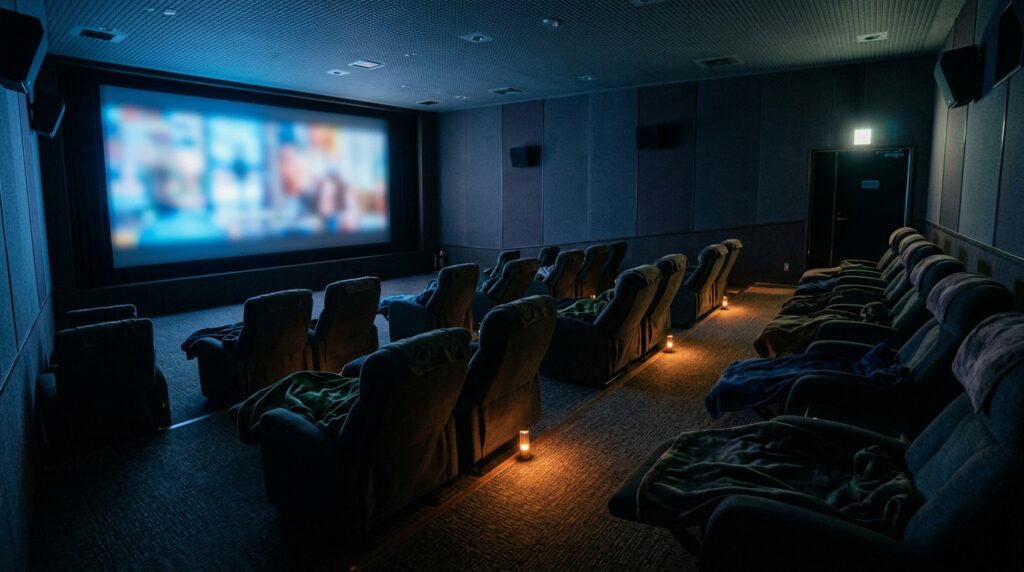
Some places even have a theater room where you can nap in a reclining chair while watching a movie. If one of your favorite movies is on, even better. But it’s the room where snoring echoes the most, so watch out. For all of us. (Ha.)
Super sento or kenko land?
To be honest, the line between a super sento and a kenko land isn’t clear. Legally they’re the same type, and the names vary: “something-no-yu,” “something spa.” “Open late at night” and “has a nap room” are good signs you’ve found a kenko-land-style place.
What counts as an onsen?
Now this part gets a little confusing.
“Onsen” isn’t actually a type of bathhouse.
The Hot Springs Act
Japan has a law called the Hot Springs Act (onsen-ho). Water or steam that comes up from the ground counts as an “onsen” if it meets either of these:
- It’s 25°C or warmer when it comes out of the ground
- It contains at least one of 19 listed substances in the required amount
So “onsen” is a type of water. That’s why some sento use onsen water, and some super sento are onsen too. It also means that water colder than 25°C can still be an onsen, if the minerals are right. A cold hot spring. (As words go, that’s a little funny.)
Day-trip bathing at a ryokan
When people from abroad say “onsen,” they’re usually picturing the big bath at a ryokan (a traditional inn) in a hot spring town, or an outdoor bath in the mountains.
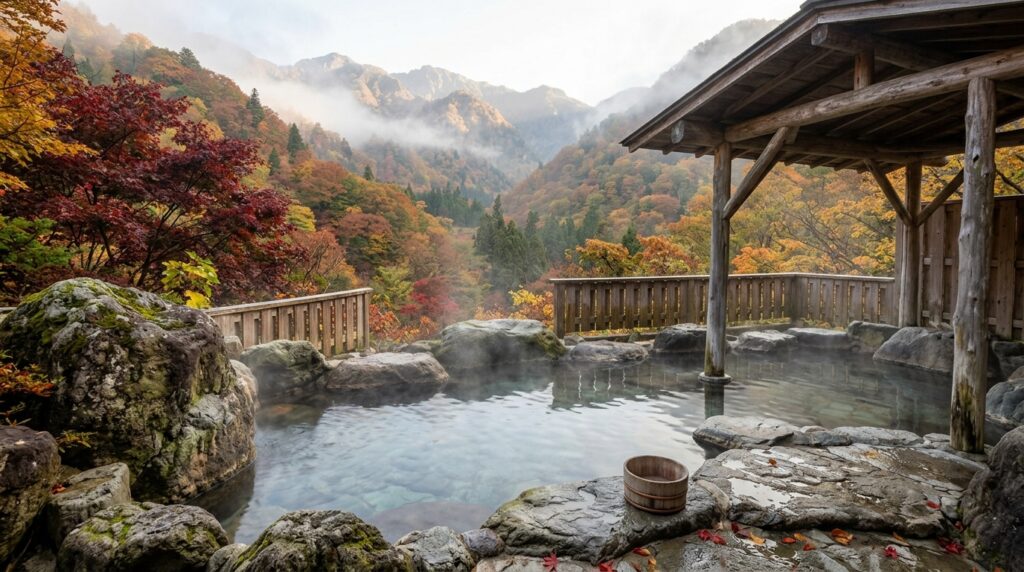
Hot spring towns also have places, including ryokan, that let you bathe without staying the night. This is called higaeri nyuyoku, day-trip bathing.
The thing is, day-trip bathing at a ryokan ends earlier than you’d think.
A ryokan’s overnight guests come first, so many only allow day-trip bathing in the daytime. You might plan a relaxing evening visit and find they’ve already stopped letting people in.
Day-trip bathing hours differ by place. Check the last entry time before you go.
I’ll write a separate guide to onsen and ryokan manners later in this series.
What is a sauna facility?
Japan is in a bit of a sauna boom right now. Sento and super sento have saunas too, but more and more places are built around the sauna itself.
What “totonou” means
Sauna, cold bath, rest. Going around these three, again and again, until your body and mind feel clear and light. In Japanese, that feeling is called totonou.
Many are men-only
Many sauna-only facilities are for men only. Check before you go.
Women, please check first whether women can use the place.
Saunas have lots of unwritten manners of their own. That’s deep enough for its own guide, so I’ll cover it separately.
Which Japanese bath should you choose?
If you’ve read this far and you’re thinking “OK, but which one?”, here’s my answer.
First, go to a sento and get that “this is Japan” feeling. Once you’re used to it, spend a lazy day at a super sento.
In the end, what I’d recommend most is a “do-nothing day” at a super sento. But before that, please step through a sento’s noren curtain at least once. That view is part of everyday life in Japan.
Choose by what you want to do
- Cheap and quick, or you want to see old-style Japan → Sento
- Try lots of baths and relax for half a day or more → Super sento
- Stay late, missed the last train, or want a cheap place until morning → Kenko land (check for late hours and a nap room)
- Natural hot spring water, or a travel memory → Day-trip onsen or a ryokan in a hot spring town
- The sauna and cold bath “totonou” experience → Sauna facility (women: check if you can enter), or a super sento with a sauna
The differences at a glance
Sento
- Price: capped by each prefecture. Tokyo: 600 yen for adults (since August 2026)
- When you pay: first, on your way in (bandai, front desk, or ticket machine)
- Towels and soap: bring your own, or buy or rent them at the front
- Lounge wear and food: almost never
- How long people stay: 30 minutes to an hour
Super sento
- Price: set by each place. Usually around 1,000 yen, often more on weekends
- When you pay: entry fee first. Everything else is recorded on your wristband, and you often pay all at once when you leave
- Towels and soap: shampoo is usually in the bathing area. Towels may cost extra
- Lounge wear and food: usually yes
- Often extra: ganbanyoku, massage, towels, and at some places the sauna
- How long people stay: half a day to a full day
Kenko land
- Price: entry fee, plus a late-night fee at some places if you stay past a certain time (for example, 2 a.m.)
- Lounge wear, food, nap rooms: usually yes
- Extras: some have game corners, karaoke, massage, and manga corners
- How long people stay: half a day to the next morning
Onsen (day-trip onsen, day-trip bathing at a ryokan)
- Price: varies a lot by place
- Watch out: day-trip bathing at a ryokan is often daytime only. Check before you go
- Remember: “onsen” is a type of water. A sento or super sento can be an onsen too
Sauna facility
- What it’s like: built around the sauna, cold bath, and rest area
- Watch out: many are men-only
Quick summary: how to use a super sento or kenko land
The sento guide covers the sento steps. Here are the steps for a super sento or kenko land, where a lot works differently.
- STEP 1Take off your shoes and put them in the shoe locker.
At some places you hand the key in at the front.
- STEP 2Pay the entry fee at the front.
Many places use a ticket machine. If you want the ganbanyoku or sauna, sign up here too.
- STEP 3Get your wristband (or locker key).
Its color or number can mean something. Keep it on your wrist.
- STEP 4Get your lounge wear and towels.
Whether they’re included depends on the place.
- STEP 5Undress in the changing room and go to the bathing area.
From here, the manners are the same as at a sento: kakeyu, wash, then the bath.
- STEP 6After your bath, change into lounge wear.
You can go to the lounge and restaurant in it.
- STEP 7Order food and drinks with your wristband.
You don’t pay on the spot.
- STEP 8When you leave, show your wristband at the payment machine or front desk and pay for everything.
- STEP 9Return your lounge wear and towels, get your shoes, and head home.
Prices (as of October 2026)
- Sento, Tokyo (from August 1, 2026): adults 600 yen
- Super sento, Gokurakuyu Meike (Niigata): 850 yen on weekdays, 900 yen on weekends and holidays. Towels extra (250 yen to rent or buy)
- Super sento, Super Sento Yudokoro Kasai (Tokyo): 1,000 yen on weekdays, 1,300 yen on weekends and holidays (checked in March 2026)
These are examples from when I checked. Prices change, so check each place’s website before you go.
When things go wrong
A place called “something-no-yu” can be a super sento or a kenko land. Look at the price board at the entrance. Around 600 yen is probably a sento. Over 1,000 yen is probably a super sento or kenko land. (It differs by area.)
At super sento and kenko lands, everything you used is added up when you leave. Food, drinks, ganbanyoku, massage, and late-night fees add up fast. If you’re worried, keep a quick note of what you’ve used.
At some places, the sauna costs extra. Check your wristband color and the sign at the sauna door. If you’re not sure, ask at the front (phrase card 1).
Day-trip bathing at a ryokan is often daytime only. Check the hours and the last entry time on the website or by phone before you go.
Lounge wear is fine almost anywhere inside the building, like the lounge and the restaurant. Just don’t go outside in it, like to the parking lot or a shop nearby.
It’s a shared room, so there will be snoring and noise. Earplugs and an eye mask help a lot. In the nap room, keep your voice down and your phone silent.
Cheat sheets you can use right away
1. Phrase card for the front desk
Save this to your phone and just show the screen.
One adult, please.
大人1人、お願いします。
Otona hitori, onegaishimasu.
Are the lounge wear and towels included?
館内着とタオルは、料金に入っていますか?
Kannai-gi to taoru wa, ryōkin ni haitte imasu ka?
Is the sauna extra?
サウナは別料金ですか?
Sauna wa betsu ryōkin desu ka?
Do I pay first?
お金は最初に払いますか?
Okane wa saisho ni haraimasu ka?
Until what time can I stay?
何時まで入れますか?
Nanji made hairemasu ka?
From what time is the late-night charge?
深夜料金は何時からですか?
Shinya ryōkin wa nanji kara desu ka?
I have a tattoo. Is it OK to enter?
タトゥーがありますが、入っても大丈夫ですか?
Tatū ga arimasu ga, haitte mo daijōbu desu ka?
2. The 5-second check before you go
- What do I want? (quick bath / lazy day / natural hot spring / stay until morning / sauna)
- Opening hours and last entry?
- Price? (different on weekends or late at night?)
- Are towels and lounge wear included?
- Can women use it? (for sauna facilities)
- Are tattoos OK? (check the sign or the website)
3. What to bring, by type
Sento
- Small towel and large towel (or rent at the front)
- Shampoo and body soap (some places don’t have any)
- Cash (coins are handy)
Super sento
- Change of clothes (especially underwear)
- Money (cash or card; you pay at the end)
- Towels, if they’re not included (saves money)
Kenko land, staying the night
- Change of clothes
- Earplugs and an eye mask
- Phone charger
FAQ
- QWhich is the “real” Japanese bath, an onsen or a sento?
- A
Both are real. A sento is the bath of everyday town life, and an onsen is natural hot spring water. And some sento use onsen water.
- QAre the manners at a super sento the same as at a sento?
- A
The manners in the bathing area are the same. Rinse with kakeyu, wash your body, then get in the bath. Your towel stays out of the water.
- QCan a kenko land replace a hotel?
- A
You can spend the night, but it’s not a private room. Think of it as something different from a hotel when it comes to looking after your bags and getting good sleep.
- QCan I go in if I have a tattoo?
- A
It depends on the place. Sento are said to be relatively easy, but some super sento and onsen turn people away. Check the sign at the entrance or the website, or ask at the front (phrase card 1).
I’m Japanese, and I write my drafts in Japanese with help from AI to turn them into natural English. The experiences here are my own. Some photos are AI-generated. If something is unclear, or things are different where you live, please leave a comment below. I’ll reply there, so the next reader can find the answer too.
I also write about Japanese manners in Japanese on note: note.com/enjoyjapan
Sources
- Ministry of Health, Labour and Welfare, “Overview of the Public Bath Act” https://www.mhlw.go.jp/stf/seisakunitsuite/bunya/kenkou_iryou/kenkou/seikatsu-eisei/seikatsu-eisei04/04.html
- Saitama Prefecture, “What is an onsen?” (definition under the Hot Springs Act) https://www.pref.saitama.lg.jp/a0707/onsen-onsen.html
- J-Net21, “Super sento” https://j-net21.smrj.go.jp/startup/guide/service/h006.html
- Nerima City, bath prices https://www.city.nerima.tokyo.jp/kankomoyoshi/event/sonota/yokuzyou/nyuuyokuryoukinn.html
- All About, Gokurakuyu Meike https://news.allabout.co.jp/articles/o/128136/
- All About, Super Sento Yudokoro Kasai (checked March 2026) https://news.allabout.co.jp/articles/o/112519/
Comments